No products in the cart.



BEST PRICE GUARANTEED

EXPRESS COURIER SERVICE

FRIENDLY RESPONSE SERVICES

100% Secure payments

There’s much to know about contact lenses, so we’ve answered the most frequently asked questions on this page. If you have any queries or concerns regarding contact lenses, you’ve come to the right place. Our comprehensive FAQ section will provide you with the necessary information to make informed decisions and ensure optimal eye care.
1. Choose your lenses – Browse our shop and select the contact lenses in your desired quantity.
2. Enter your prescription – Provide your prescription details (available from your optometrist or optician). If you’re unsure, simply take a photo and send it to us via email at [email protected] or WhatsApp +6011 2529 1660.
3. Complete shipping & payment – Fill in your shipping information and pay using any of the following: Bank transfer, PayNow, DuitNow, TNG, credit card, or PayPal.
Once payment is confirmed, orders are usually dispatched within 48 working hours, subject to stock availability.
If a lens type is temporarily out of stock, please allow 2–8 weeks for restocking.
If you encounter any issues, contact our customer service team – we’re happy to assist.
If you wish to cancel all or part of your order, reach out to our Customer Service team. In cases where cancellation is permitted, the buyer is responsible for any transaction fees (such as those charged by PayPal).
Please note that custom and made-to-order lenses cannot be cancelled, returned, or exchanged after we have received your order.
Yes, we deliver worldwide!
Just be aware that the estimated delivery times don’t include possible delays from customs or local shipping carriers.
We accept multiple payment options, including bank transfer, PayLah, and credit cards via PayPal.
Please note that we do not accept checks or cash on delivery (COD) at this time.
Yes – we take security seriously. Our systems prevent misuse or alteration of your information, and all data is fully encrypted for your privacy.
Learn more in our Privacy Policy.
Orders are dispatched within 3–14 days of payment confirmation, subject to stock availability.
Should any items be out of stock, we will notify you with a revised delivery estimate – typically an additional 4–12 weeks.
We’ll email you a tracking number as soon as your order is dispatched.
If you’re a member, log in to “My Account” and check your order history for the latest shipping status.
Don’t worry. Email your Order ID to [email protected] or WhatsApp it to +6011 2529 1660. We’ll reply with your order status as soon as possible.
For our Return Policy, please refer to the CityLens Website Terms & Conditions of Use and Refund and Return Policy. Click to read them.
To be accepted, returned items must be in original condition, resalable, with intact packaging, and packed securely for shipping. Items that do not meet our Return Policy requirements will be rejected.
Click here to read the full Terms & Conditions of Use and Refund and Return Policy.
Expiry dates differ from brand to brand, though most lenses last at least 18 months.
On the rare occasion that the remaining expiry is less than 12 months, we’ll be sure to let you know.
Absolutely — you can buy contact lenses online. It’s a convenient, cost-effective way to get the lenses you trust.
Just make sure you have one thing first: a valid prescription.
Ensuring you have the right prescription is key to your clearest vision. That’s why we ask that you provide a prescription written specifically for contact lenses, not for glasses.
Because coloured contact lenses vary in size and fit, they need to be prescribed and fitted by an eye care professional. As a replacement centre, we only sell lenses you’re already using successfully. So once you have your prescription, come to our website and enjoy savings of up to 30%.
Yes, of course you can. You’ll just need to purchase two boxes—one for each prescription.
It’s great that you’re interested in trying contact lenses. To make sure you get a pair that’s safe, comfortable, and perfect for you, the most important first step is a professional fitting.
Visit us in Taman Johor Jaya, Johor Bahru, Johor. Book an appointment via email ([email protected]) or WhatsApp (+6011 2529 1660).
Step 1: Prepare your hands
Wash your hands thoroughly with soap, rinse well, and dry them with a clean, lint-free towel.
Step 2: Inspect the lens
Place the lens on your palm and check that it is clean, moist, and free of any tears or damage.
Step 3: Check orientation
Make sure the lens is not inside out. (If it is, the edges will flare outward slightly.) Place the lens on the tip of your index finger.
Step 4: Insert the lens
Use the index finger of your opposite hand to gently lift and hold your upper eyelid (to prevent blinking).
Use the middle finger of the hand holding the lens to pull down your lower eyelid.
Look upward and gently place the lens onto the white part of your eye.
Look downward to help the lens settle into place, then release your eyelids and close your eye for a moment. The lens should now be centred correctly.
Step 1: Check lens position
Make sure the lens is centred on your eye before removing it. To check, cover your other eye. If your vision is blurry, the lens is not centred. Look into a mirror and gently centre it using your finger.
Step 2: Pull down your lower eyelid
Step 3: Slide the lens down
While holding your lower eyelid down, place your finger on the bottom edge of the lens and slide it onto the white part of your eye.
Step 4: Remove the lens
Gently squeeze the lens between your finger and thumb, then lift it away from your eye.
Helpful tip: Get into the habit of removing your right eye’s lens first. This helps reduce the chance of mixing up your lenses.
Step 1: Clean the lens
Place the lens in the palm of your hand and apply a few drops of recommended contact lens solution. Using the forefinger of your opposite hand, gently rub both sides of the lens.
Step 2: Rinse the lens
Rinse the lens thoroughly with plenty of fresh contact lens solution.
Step 3: Store the lens
Fill your lens case with enough solution to fully cover the lens. Place the cleaned and rinsed lens into the appropriate compartment (left or right). Secure the cap. Repeat for your other lens. Leave the lenses in the closed case for at least four hours to allow proper disinfection.
Step 4: After wearing
Once you have inserted your lenses, pour out the remaining solution from the case. Rinse the case with fresh solution and leave it open to air dry.
⚠️ Important warning: Never use water to clean or store your contact lenses. Water lacks the necessary disinfecting properties and can contaminate your lenses, potentially causing serious, irreparable eye harm.
For daily disposable lens wearers:
You do not need to follow the storage steps above. However, if you drop a lens or something gets into your eye, you may need to clean it. In that case, follow Steps 1 and 2 only.
Base curve (BC) measures the curvature on the back of a contact lens, which should align with your eye’s natural shape to ensure proper fit and comfort. The lower the BC number, the steeper the curve of your cornea.
Base curve (BC) measures your contact lens curvature and affects how the lens sits on your eye. A proper fit is crucial—even a small mismatch can cause blurry vision or discomfort. If you want to switch lens types (e.g., from clear to coloured), consult your optometrist or optician for a new fitting. Other prescription numbers may match, but fit isn’t guaranteed. Your optometrist or optician will consider factors like lens material, wearing schedule, and care routine to find the right lens for you.
Changing your contact lenses’ base curve (BC) isn’t something you can or should do on your own. To do it safely and effectively, you need to get a new contact lens fitting from an optometrist or optician.
Most manufacturers offer only one or two base curve options for their soft disposable contact lenses, typically ranging from 8.1mm to 9.0mm, depending on the brand. These variations exist because every eye is shaped differently—a lens that fits one person comfortably may not suit another. During your eye exam, your optometrist or optician will measure the curvature of your eye’s front surface and determine the correct base curve for you. Both the base curve and the recommended lens brand will be listed on your contact lens prescription.
Diameter (DIA) measures the width of your contact lens from one edge to the other. Your optometrist or optician will determine the right diameter for you during your eye exam.
Dk, or oxygen permeability, measures how easily oxygen passes through a contact lens material. Dk/t, or oxygen transmissibility, indicates the actual amount of oxygen that reaches your eye through a lens of a specific thickness.
Contact lenses are made from specialized polymers. Soft lenses use hydrogel (water-absorbing plastic) or silicone hydrogel (which allows more oxygen flow). Rigid gas permeable (RGP) lenses are made from silicone and fluoropolymers that let oxygen pass directly through the material. Older hard lenses (PMMA) are no longer common because they block nearly all oxygen.
It’s frustrating when a contact lens rips. You might wonder why they aren’t made from stronger material. Over 30 million Americans wear contact lenses, and most choose soft lenses because they’re comfortable and allow plenty of oxygen to reach the cornea. However, that comfort comes with a risk of damage. Follow these tips to prevent tears.
1. Avoid using fingernails
Tearing often happens when nails are used to handle lenses. When removing lenses, use your thumb and forefinger to slide the lens and break the suction—never pinch from the center with your nails. Keep nails short and smooth.
2. Unfold in solution
If a lens gets folded, don’t pull the edges apart with your fingers. Instead, place the lens in a pool of saline solution on your palm and gently massage it underwater until it opens without damage.
3. Keep lenses moist
Dry lenses tear easily. Never store them dry; always keep them in solution. If lenses feel dry in your eyes, use rewetting drops before removal. Never use water or any liquid other than contact solution.
4. Fill the lens case completely
Partially filling your case can cause the lens to stick to the dry wall, leading to a tear when you remove it. Always use enough solution to fully submerge both lenses.
5. Ask about lens modulus
Not all contacts are the same. Modulus measures how resistant a lens material is to deformation. Higher modulus lenses are stiffer and easier to handle; lower modulus lenses are floppier (more comfortable but possibly more prone to tearing). If tearing is an issue, ask your eye doctor which modulus is best for you.
6. What to do with a torn lens
Never wear a torn lens—even a small tear can scratch your cornea. To remove it, wash your hands, apply rewetting solution to lubricate the lens, pull down your lower eyelid, slide the largest piece down with your finger, and gently remove it with your thumb and forefinger. Then check your eye for any remaining pieces.
You can find this date printed on both the outer box and on each blister pack. Look for it marked with “EXP” (Expiration) or “USE BY”, often next to an hourglass symbol.
Always store your contact lenses in a cool, dry place away from direct sunlight, heat, or moisture to keep them in good condition until you’re ready to wear them.
Yes. Even when not worn, monthly lenses stored in a case require solution changes every 1–2 days to prevent bacterial growth. If you won’t use them for a long time, it’s safer to discard the opened pair and start fresh when needed. Never let lenses sit in stale solution.
No, properly fitted and prescribed contact lenses won’t make your eyes worse. However, poor hygiene, sleeping in lenses, or wearing non-prescription lenses can lead to infections, oxygen deprivation, and corneal damage. Stick to your doctor’s recommendations, clean them daily, and replace them on schedule to keep your eyes healthy.
For most people, 10–12 hours daily is safe for standard soft lenses, though some may tolerate up to 14–16 hours. Always listen to your eyes—remove them if dryness or irritation occurs. Factors like lens material (silicone hydrogel allows more oxygen), your environment, and natural tear production affect comfortable wear time.
New wearers should build up hours slowly. Exceeding limits reduces oxygen to the cornea, causing swelling, dryness, and significantly raising infection risk—especially if you sleep in lenses.
No, health experts strongly advise against it. Sleeping in contacts—even for a nap—restricts oxygen to your cornea and raises infection risk. Studies show you’re 6–8 times more likely to develop serious eye infections like microbial keratitis compared to day-only wear. Risks include corneal hypoxia (swelling, redness) and ulcers, which can threaten vision.
Even FDA-approved “extended wear” lenses carry higher infection risks than daily wear.
If you accidentally sleep in them: remove lenses immediately, wear glasses to rest your eyes, use preservative-free drops, and watch for pain, redness, or blurred vision. See a doctor if symptoms appear.
No, not when used correctly. Contact lenses are safe with a proper prescription, good hygiene, and following wear schedules. Problems arise when you sleep in them (6–8x higher infection risk), use water or saliva to clean them, overwear them, or buy non-prescription lenses. These habits can lead to infections, corneal damage, or vision loss. However, millions wear contacts daily without issues by removing them at night, cleaning properly, and replacing them on schedule.
Treat contacts as the medical devices they are, and your eyes stay healthy. When in doubt, ask an optometrist or optician.
Recommending the best contact lens for extremely dry eyes is difficult because it varies from person to person. That said, silicone hydrogel lenses are often a good option. They contain less water than conventional hydrogel lenses, so they’re less likely to dehydrate on the eye. Speak with an optometrist or optician about trying these lenses. Your optometrist or optician may first need to identify the underlying cause of your dry eye and create a treatment plan. If necessary, they can refer you to a specialist.
Keep in mind that some people with severe dry eye may not be suitable for contact lens wear at all.
Dry eyes can make contact lens wear uncomfortable. You may notice the lens feeling sticky or gummy, and your vision may become blurry or hazy. Ideally, you should blink every 6 to 8 seconds while wearing contacts. However, this is hard to do when focusing on a computer, book, or video game.
Using rewetting drops – You can use them as often as needed. No, you won’t become addicted. The key is to use them before your eyes get too dry. Once a lens becomes dry, it attracts deposits and gets dirty, and most drops won’t help. In that case, you’ll need to remove the lens, rub it clean with the solution, and re-insert it.
No. Swimming with contacts – in pools, lakes, oceans, or hot tubs – is dangerous. Water contains microorganisms that can cause severe eye infections like Acanthamoeba keratitis, which may lead to vision loss. Contact lenses trap bacteria and parasites against your eye, even in chlorinated water.
Safer options: Wear prescription swimming goggles, use daily disposables only if necessary (discard immediately after swimming), or simply remove your lenses before getting in the water. Also, avoid showering with contacts.
If you accidentally swim in your lenses: remove them right away, discard if possible, and watch for redness, pain, or blurred vision. See an eye doctor if symptoms appear.
Soft lenses first, then makeup – Soft lenses are more susceptible to absorbing oils, creams, or makeup particles if applied after. Inserting lenses first keeps them clean.
GP lenses: makeup first, then lenses – Rigid gas permeable lenses are less absorbent, and applying them after makeup reduces the risk of trapping makeup underneath.
Avoid solvent-based mascaras and fibre mascaras – Solvents can irritate; fibres can get into the eyes and under the lenses.
Keep glue, perfume, and cologne away from lenses – Chemicals can damage lens material or irritate the eyes.
Eyeliner below lash line, not on inner rim – Inner rim (waterline) application can block meibomian glands and transfer makeup into the tear film.
Remove lenses before removing makeup – Prevents makeup residue from getting onto lenses during removal.
Yes, but only with a valid prescription and proper care. Non-prescription lenses from unregulated sources risk corneal scratches, severe infections (including Acanthamoeba), and toxic pigments. Always get a professional fitting – an optometrist measures your eye shape to ensure a safe fit.
Safe wear tips:
Clean and store lenses with solution (never water)
Wear no more than 8 hours daily
Remove before sleeping
Choose daily disposables over long-term lenses
Warning signs: remove lenses immediately if you experience redness, pain, blurred vision, or light sensitivity. See a doctor promptly.
Types of Contact Lenses
Daily Disposable Lenses – Wear for one day, then discard. Single-use, hygienic, and ideal for sensitive eyes.
Bi-Weekly Disposable Lenses – Wear during the day, remove before sleeping or napping, and clean daily. Reusable for up to 14 days.
Monthly Disposable Lenses – Wear during the day, remove before sleeping or napping, and clean daily. Reusable for up to 30 days.
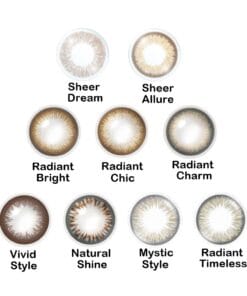
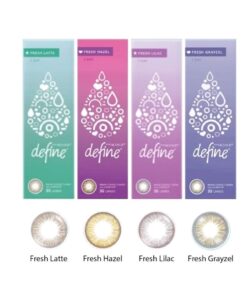
Coloured Cosmetic Lenses – Designed to change or enhance eye colour, with or without vision correction. Available in daily, bi-weekly, or monthly replacement schedules.
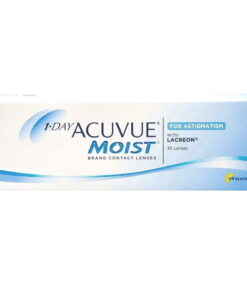
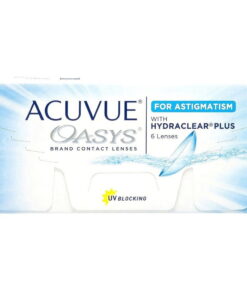
Toric Lenses – Specially shaped to correct astigmatism by aligning with the irregular curve of the cornea. Available in daily, bi-weekly, or monthly schedules.
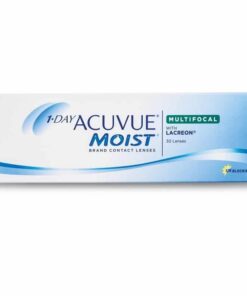
Multifocal Lenses – Contain different zones for near, intermediate, and distance vision to correct presbyopia. Available in daily, bi-weekly, or monthly schedules.
Conventional (Yearly) Lenses – Reusable for up to one year with proper daily cleaning and storage. Less common today but still available.
Rigid Gas Permeable (RGP) Lenses – Durable, oxygen-permeable hard lenses that provide sharp vision. Typically lasts 1–2 years with proper care.
Orthokeratology (Ortho-K) Lenses – Rigid gas permeable lenses worn overnight to temporarily reshape the cornea, allowing clear vision during the day without lenses.
Contact lenses normally move a small amount when you blink or rotate your eye – enough to stay comfortable but not enough to notice. Excessive movement suggests the lenses don’t match your eye’s shape and curve, leading to blurred vision and discomfort. Stop wearing them and see an optometrist or optician to explore better-fitting lenses.
Avoid wearing contact lenses if you have conjunctivitis or any eye infection. Take a break until the infection is completely gone. Discard any lenses worn before the infection, and don’t reuse anything that touched your eye. Even one evening of lens wear can cause re-infection. Remember: the sooner you stop, the sooner you can safely start again.
All contact lens wearers should own a pair of glasses, regardless of their lens replacement schedule. Glasses let you rest your eyes and serve as a backup when you can’t wear contacts (e.g., lost lens or eye infection). Your glasses should correct your vision to at least 20/40—the legal driving standard in most states. Overwearing lenses, especially sleeping in them, increases infection and inflammation risks. If your eyes become irritated, remove your lenses right away and call an optometrist or optician.
Airplane cabins are dry and have lower oxygen, which can make contacts uncomfortable on flights over three hours. Rewetting drops designed for contacts may help. TSA allows full-size contact lens solution as a medical necessity, but you must declare it at security. Travel-size bottles (2 oz) are also available. Never repackage the solution into a smaller container—it risks contamination and eye infection.
For long flights, wearing glasses is often the most comfortable option.
Why take the risk? Monthly lenses must be thrown away 30 days after opening the blister pack, regardless of how often you’ve worn them. Overdue use can cause infections, irritation, and blurry vision.
If you wear lenses rarely, ask your optometrist or optician about daily disposables. They come in 30-packs and, while pricier per pack, are a better value for infrequent wear.
Don’t worry – a contact lens can’t get lost behind your eye. A natural barrier makes that impossible. It can, however, slide under your eyelid (often from rubbing your eyes). You can usually shift it back into place and remove it. If this happens often, be careful about rubbing your eyes.
Contact lenses expire for two reasons: material breakdown and loss of sterility. Over time, the lens material (hydrogel or silicone hydrogel) degrades, affecting oxygen permeability, water content, and fit. The sterile saline solution in sealed blister packs also has a shelf life. After expiry, the solution may no longer be sterile, increasing infection risk. Expired lenses can cause discomfort, blurred vision, and corneal damage. Even if the pack looks intact, never use expired lenses.
Always check the expiry date before opening – your eye health isn’t worth the risk.
Don’t panic – a lens cannot go behind your eye. Wash your hands, use rewetting drops, and look in a mirror. If off-center, look the opposite way and gently slide the lens back onto your cornea with a moist fingertip or by moving your eyelid. For a lens under your upper lid, look down and massage the lid gently. Remove once centred.
Don’t rub aggressively or use sharp objects. If you can’t remove it after 15–20 minutes, or if you have severe pain, redness, or blurred vision, see an eye doctor immediately.
Contact lens wear during pregnancy is generally safe, though hormonal changes can cause nearsightedness, dry eye, and reduced lens tolerance. Pregnant women with a history of herpes simplex virus (HSV) eye infection may have a mildly higher risk of recurrence. Conflicting evidence exists on corneal shape changes, but these may also affect lens comfort. If you experience vision changes while pregnant, consult your eye care professional to rule out other causes and adjust your lenses if needed
Generally, no. Even short naps reduce oxygen to your cornea and can cause dryness, redness, or irritation. While the risk is lower than with overnight wear, bacteria can still multiply more easily. If you accidentally doze off, remove your lenses as soon as you wake, use rewetting drops, and switch to glasses for the rest of the day.
To keep your eyes healthy and avoid potential infections, always remove your contacts before any sleep, even a quick power nap. Your eyes will be more comfortable and safer for it.
No. Tap water carries microorganisms like Acanthamoeba, which can cause severe eye infections and vision loss. Never use tap water to rinse contacts or your lens case. Don’t make homemade solutions. Always dry your hands thoroughly before touching your lenses.
Use only eye drops approved for contact lenses. Avoid ‘get the red out’ drops – they contain chemicals that may harm your eyes long-term. Preservative-free drops are generally safe; drops with preservatives can be toxic. Ask your eye care professional which drops suit your eyes and lenses.
Contact Lenses in Industrial Work Environments
Industrial workplaces pose eye hazards like chemical exposure and flying debris. However, contact lenses can be worn safely and may even offer some protective benefit.
Chemical exposure – A common concern is that lenses might trap harmful substances against the eye. Studies show the opposite: when exposed to a toxic agent, the eye’s blink reflex helps the lens form a tight seal, reducing contact with the cornea. The lens can then be flushed out with proper irrigation.
Arc welding (UV/heat) – There’s a myth that contacts could fuse to the cornea during welding. No scientific evidence supports this. While heat may partially dehydrate a lens, arc flashes do not generate enough energy to evaporate the tear layer required for fusion.
Bottom line – Regulatory bodies (e.g., American Chemical Society, American Optometric Association) agree: contact lenses alone are not protective equipment. However, when worn with approved safety eyewear, they do not add extra risk.
Yes – serious ones. OTC contact lenses are illegal (all contacts are medical devices requiring a prescription). Buying them without a prescription risks severe infections like microbial keratitis, which can cause corneal ulcers and permanent vision loss. Non-prescription lenses are often poorly fitted, leading to corneal scratches, sores, and increased infection risk (up to 16 times higher). You also receive no professional guidance on cleaning and safe use. To protect your eyes, always get a valid prescription from a licensed eye doctor and purchase lenses from a legitimate source. Never buy from beauty stores, flea markets, or unverified online shops.
Wearing contact lenses beyond their prescribed time (e.g., using dailies for multiple days) raises serious risks:
Oxygen starvation (swelling, redness, blurry vision)
Microbial keratitis – bacteria, fungi, or Acanthamoeba cause severe infections that can lead to permanent vision loss
Giant papillary conjunctivitis (allergic bumps under eyelids)
Corneal neovascularization (abnormal blood vessel growth)
Dryness, discomfort, and deposit buildup
Following your replacement schedule (daily, bi-weekly, or monthly) is essential. Replace early if unsure – your eye health depends on it.
Daily disposable lenses have significantly reduced the risk of Acanthamoeba keratitis (AK) – reusable lenses carry 3.8× higher risk. Switching to dailies could prevent 30–62% of AK cases.
Silicone hydrogel lenses improved oxygen permeability but did not lower overall microbial keratitis (MK) rates. Studies show 30-day silicone hydrogel overnight wear has a similar MK risk to 6-day hydrogel overnight wear.
The single biggest driver of infection remains overnight wear – regardless of lens type. Proper hygiene and following replacement schedules matter more than lens material alone. Daily disposables plus no overnight wear offer the safest approach.
Store your open lens case in a clean, dry, room-temperature spot away from sunlight, heat, bathrooms, and kitchens (to avoid bacteria, humidity, and splashes). A bedroom nightstand or dresser works well – place it on a clean tissue. Keep caps loosely closed for airflow. In the morning, empty the case, rinse with fresh solution (never water), wipe dry, and leave it open upside down on a tissue to air dry. Never store cases in the fridge, freezer, or bathroom.
Replace your case every 1–3 months. Proper storage prevents contamination and keeps your lenses safe.

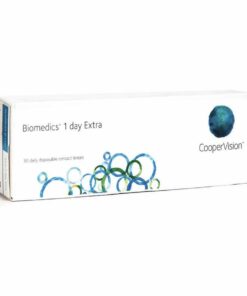
Biomedics

BEST PRICE GUARANTEED
EXPRESS COURIER SERVICE
FRIENDLY RESPONSE SERVICES
100% Secure payments